
By Stephan Van Der Merwe
Some might think that the Karoo is nothing more than an arid semi-desert landscape only inhabited by Sheep and scattered with a few succulent shrubs here and there. But for the outdoorsman it is a jewel that is beckoning to be discovered. Hunting opportunities in the Karoo are plentiful and there is much more than just Springbuck and Oryx on offer. However if it is a record book Springbuck ram that you are after, then you most certainly have the best chance of finding it in the Karoo. Outfitters such as Jules of the Karoo are world renowned for delivering the majority of the top 10 Springbuck trophies in both Roland Ward and SCI.
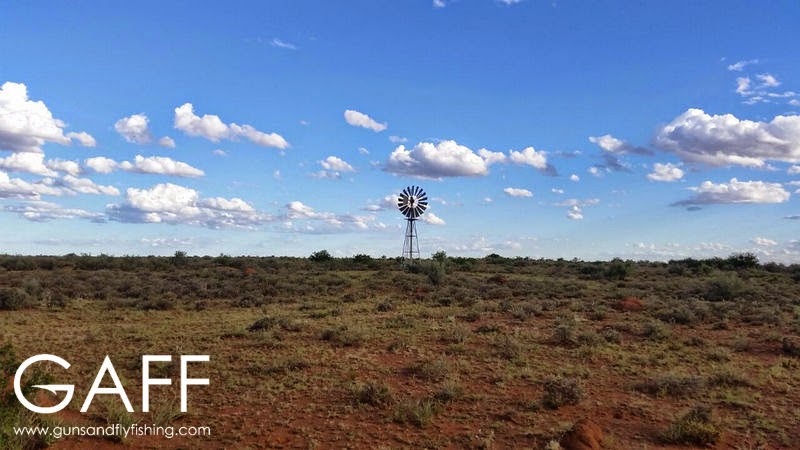
Now I bet none of you ever thought that the words Karoo and fly fishing will be mentioned in the same sentence, but with both the Orange and Riet Rivers present, the Karoo has some of the best Yellowfish fly fishing on offer in South Africa, whilst also boasting some spectacular scenery.
My fellow GAFF Field Staff representative Emile and I had the privilege of spending a week in the beautiful Karoo near Hopetown to do what we love most, and that is to hunt and fly fish.
We were very fortunate to be given the opportunity to hunt some Springbuck in the time that we were there by a family member of Emile that is a game farmer in the Hopetown district. This was also then where we stayed during our visit to the Karoo. We didn’t waste much time and on the 2nd day of our visit we went on our Karoo hunting adventure.
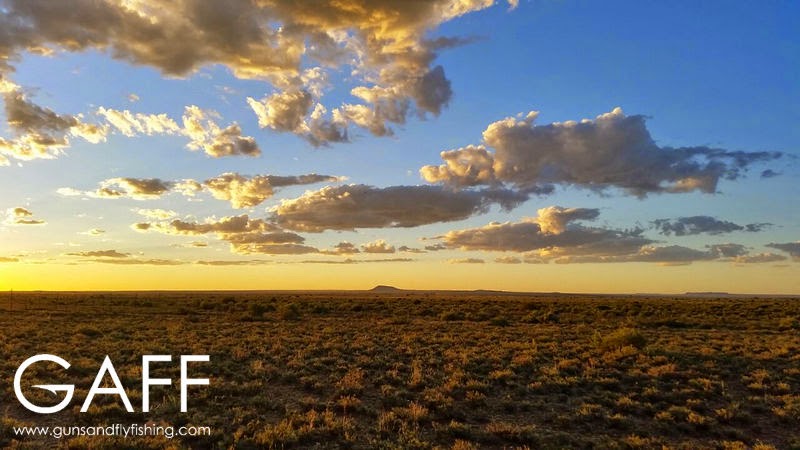
The chosen method in which the hunt was to be conducted was a driven hunt, given the type of terrain that we encountered and the short amount of time that we had in which to complete the hunt. For those of you who do not know, a driven hunt is a method used by a lot of outfitters in the Karoo as the landscape mostly consists of wide open spaces and “koppies” (hills) which makes stalking for Springbuck and other game species on foot very challenging.
This is done by placing the hunter in a strategic position after which the animals are then driven toward the hunter’s surrounding area and within acceptable shooting range, with the help of either a vehicle or by horsemen. This is however done in a very subtle manner and does not cause the animals to stress whatsoever. It is pretty much done in the same manner as when you drive around counting the animals in a herd, to give you a good idea.
Our weapon of choice was a Musgrave rifle in 25-06 Remington. This caliber is ideal for the Karoo landscape where a fast, flat shooting calibre is a necessity, as the majority of shots are taken on average between 200 and 400 meters.
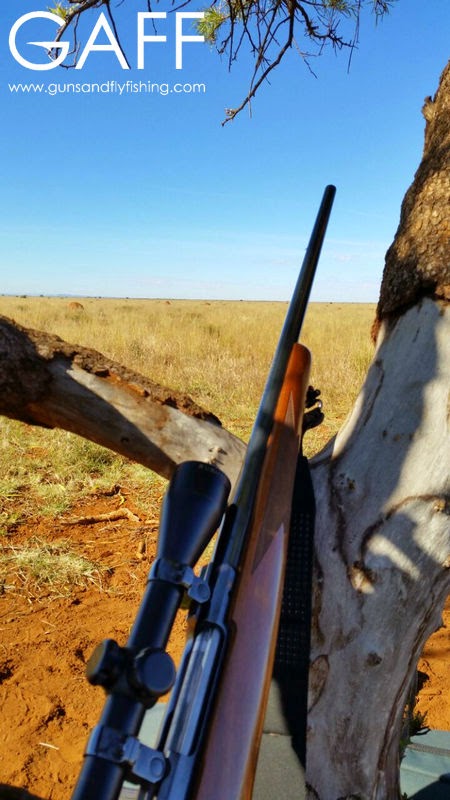
Most of the Springbuck were in a big herd of approximately 200 animals. I dropped Emile off at a tree just below a “koppie” (hill) as this was a good strategic position for him to wait for the animals to move within shooting range. After some persuasive manoeuvring by the hunting vehicle the herd slowly but surely moved toward Emile’s position.
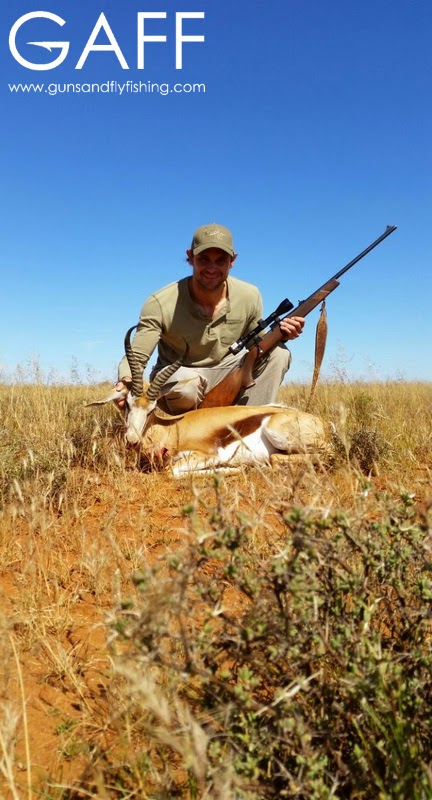
Scanning through the big herd he identified his target which was a big ram and a beautiful representative of the species. The ram stood at 252 metres and by using the tree next to him as support for his rifle, Emile made the shot and the Springbuck ram collapsed right there and then. We took some photos of the beautiful Karoo Springbuck ram and admired the character of its horns.
We also spent a day fly fishing the Orange River, just outside of Hopetown. The specific morning we got there was very hot, the flow of the river was high and finding some promising water was rather tricky. Both Emile and I caught a couple of Smallmouth Yellowfish in our first session of the day, but the conditions made it quite challenging and the numbers did not meet our expectations. After a well-deserved lunch (and hiding from the scorching sun) in the shade, we headed back to the river later that afternoon. It was still a blistering 37°C but the flow of the river was down, which made things a bit easier to contend with.
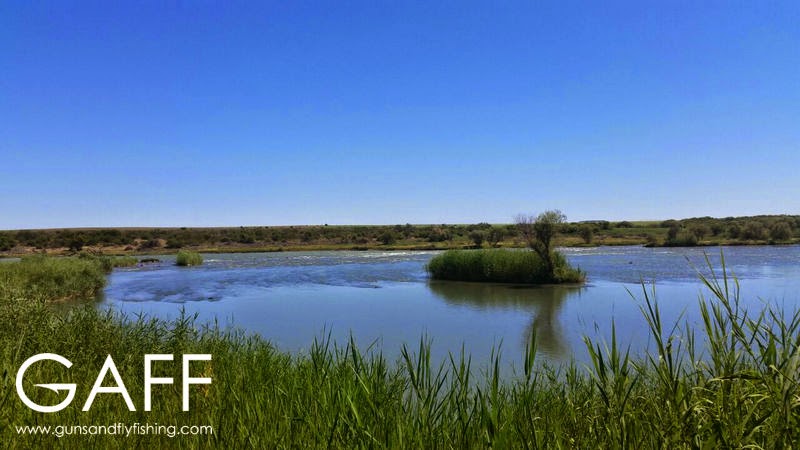
After working our way down the river bank I spotted a rapid that looked promising and I had a good feeling that it would deliver some fish. On my first drift I hooked a fish but unfortunately lost it. Not too long after that Emile caught a nice Mudfish on a #8 Mustard Caddis and it seemed that they were mostly feeding on the bottom as we got more takes, the deeper we started to fish for them.
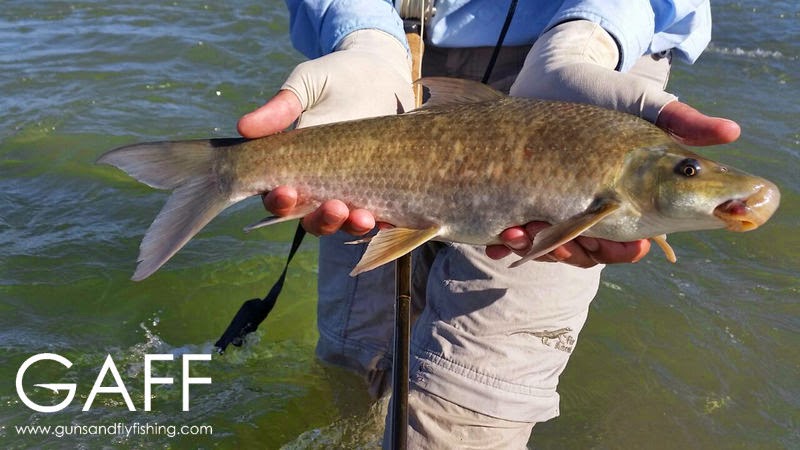
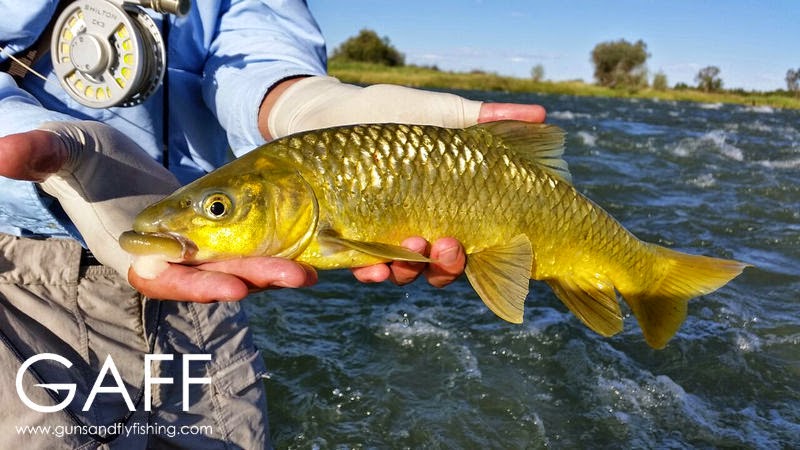
All of a sudden chaos broke out and we started catching fish after fish. It was as if our prayers were answered and the floods gates of heaven opened, full of eager fish willing to take up any offering of feathers and steel. We had a number of double-ups and we didn’t even get a chance to take photographs in between landing fish. We did however manage to take quick selfie of a double-up amidst all the madness.
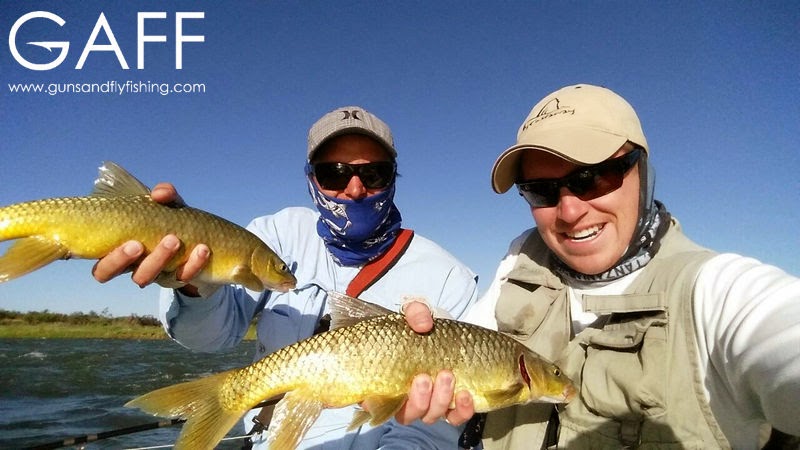
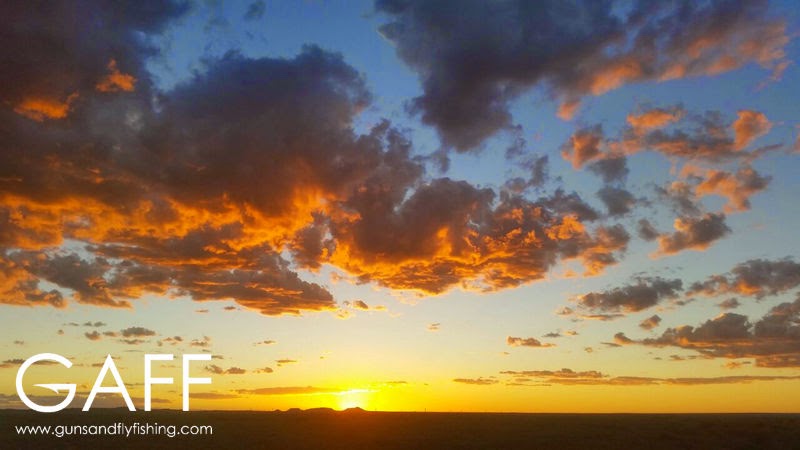
Later that day as the sun set over the stunning Karoo landscape, we both agreed that is was one of our best, if not the best sessions we had ever had fly fishing for Smallmouth Yellowfish.
The Karoo is a very special place, and once you have been there you will keep on going back. It has some of the most beautiful scenery in the country and it has so many activities on offer for the whole family, which is what makes it such an amazing destination.
© 2015 Guns and Fly Fishing. All Rights Reserved.
Leave a Reply